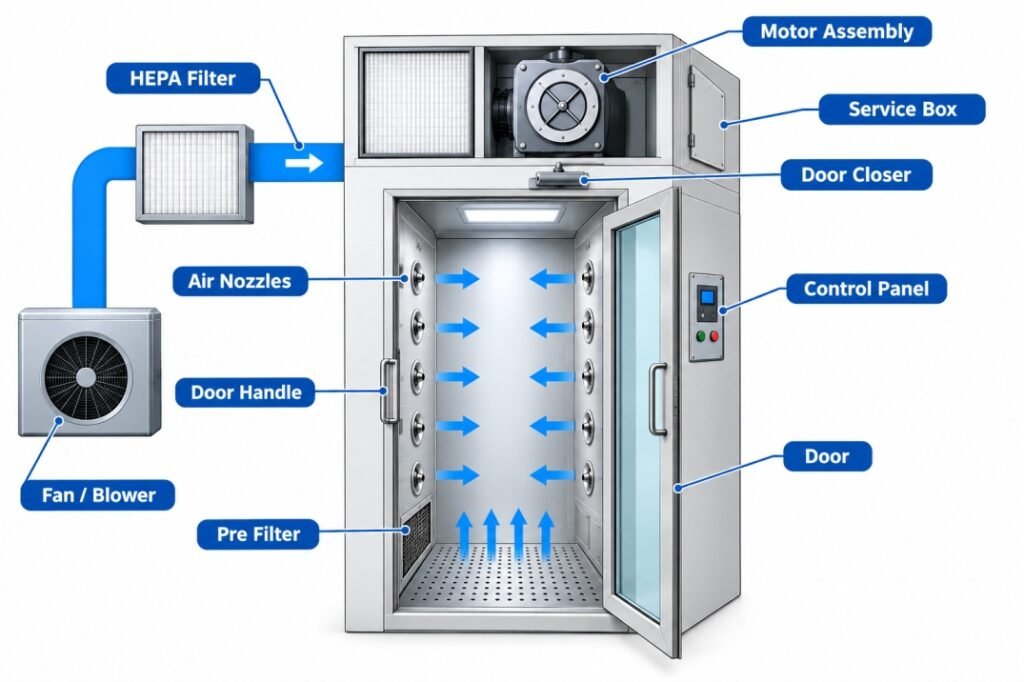
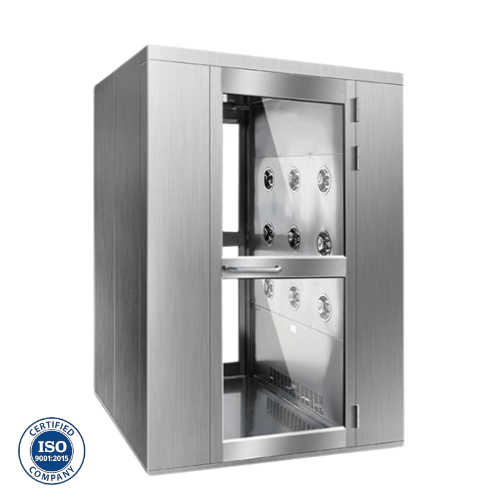
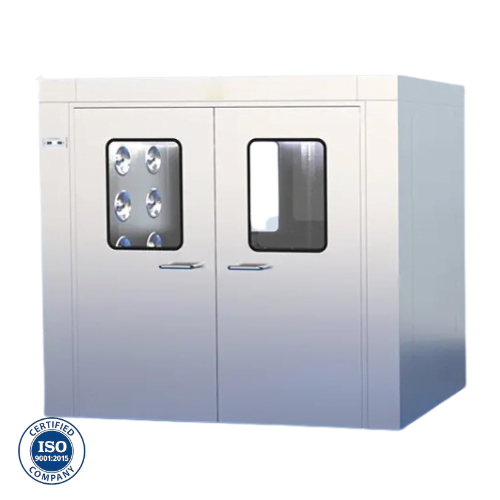
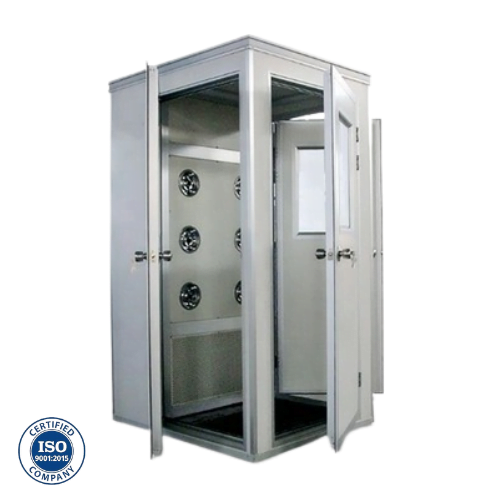
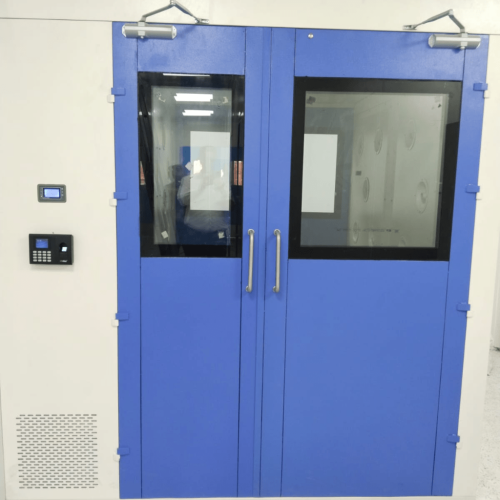
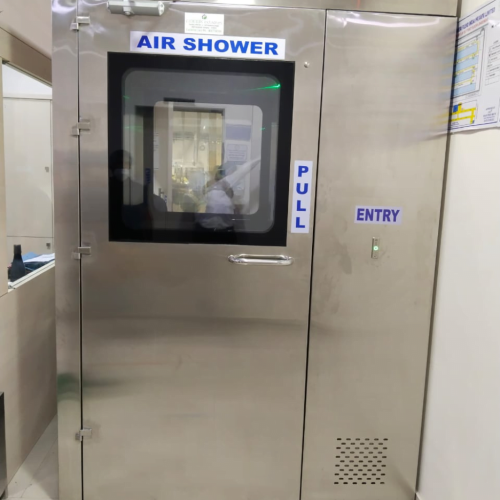
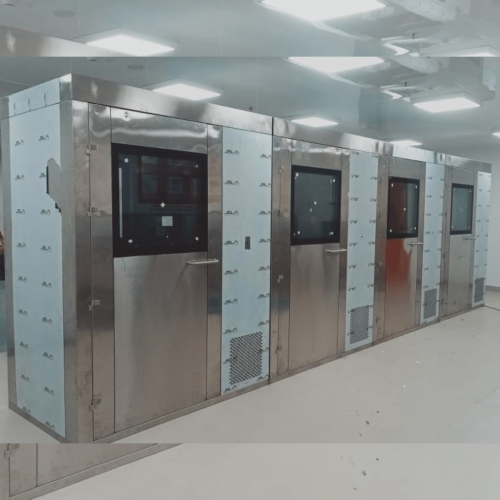
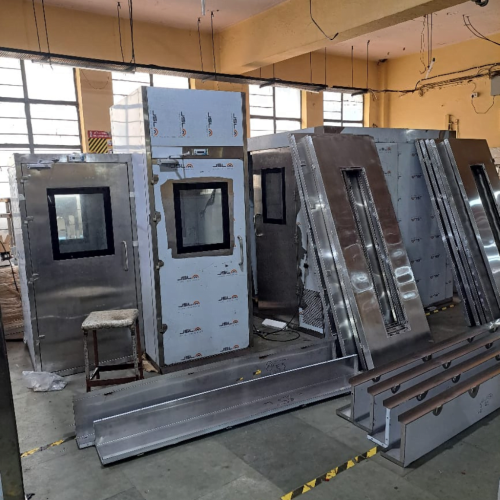
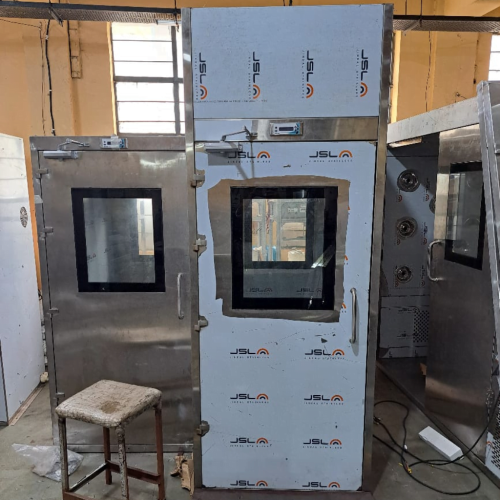
An air shower is a small enclosed chamber installed at the entrance of a cleanroom or controlled environment. When a person or material passes through it, high-velocity jets of filtered air blow loose dust, fibres and particles off the surface before they can enter the clean area. It acts as the last checkpoint against contamination carried in on clothing, tools and trolleys.
Air showers are used in pharmaceutical, biotech, electronics, food processing and laboratory facilities. If you are ready to buy, see our range of air showers manufactured in India.
Most contamination in a cleanroom is brought in by people and materials, not generated inside. Even a clean gown picks up fibres and dust on the way to the entrance. An air shower reduces this by removing loose particles from surfaces just before entry, which helps protect product quality in pharmaceutical, biotech, electronics and food processing facilities.
Three points are worth knowing:

The working of an air shower involves several steps to effectively remove contaminants from personnel or equipment before they enter a cleanroom or controlled environment. Here’s a detailed explanation of how an air shower chamber works:
Cronax – India’s Largest Air Showers Original Equipment Manufacturer (OEM)
1. Construction and Design:
2. Airflow and Filtration:
3. Air Shower Room Cycle:
4. Control System:
5. Electrical and Power:
6. Safety Features:
7. Compliance and Standards:
8. Optional Features:
Air showers, also known as cleanroom air showers, are specialized enclosures designed to decontaminate personnel and equipment before they enter a controlled environment, such as a cleanroom or laboratory. Here are the different types of air showers based on their design and usage:
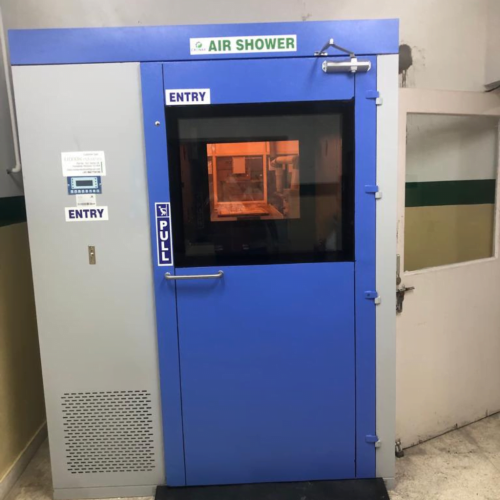
A compact chamber that cleans one person at a time, with a single entry and exit door and nozzles that blow filtered air onto clothing. It suits small cleanrooms, labs and low-traffic entrances.
A larger chamber where several people pass through in one cycle, with more nozzles to cover everyone inside. It reduces queues at busy entrances and during shift changes.
Adds a third door, so people or materials can enter or leave from a different direction. It helps in cleanroom layouts where traffic flow is more complex.
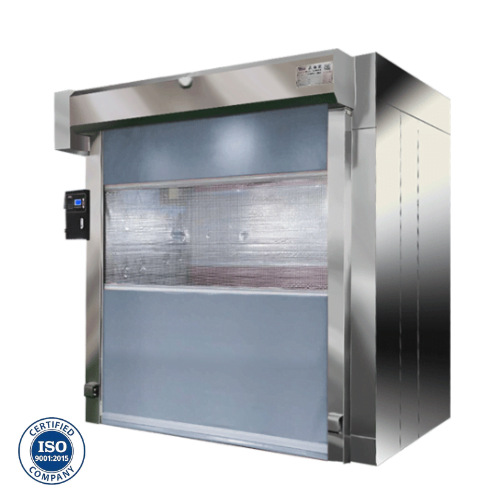
Uses roller doors that move up and down instead of swinging open. They open and close quickly and work well where carts, trolleys or equipment pass through.
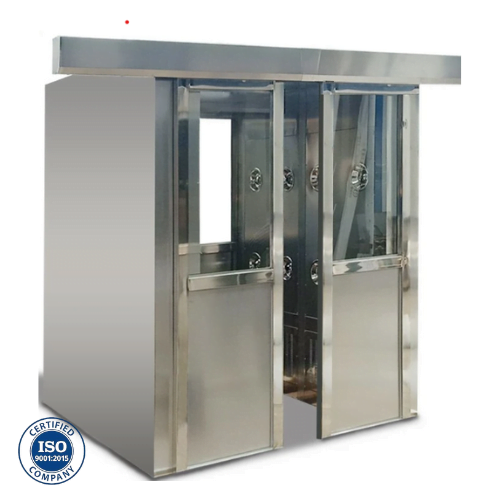
Uses doors that slide sideways, so no floor space is needed for a door swing. It suits tight layouts and high-traffic entrances.
Designed for general use, these air showers feature high-velocity nozzles that blow air to remove contaminants from personnel or materials. They are typically compact and efficient for routine cleanroom or industrial applications.
Has an entry on one side and an exit on the other, so people or materials are cleaned on the way in and the clean side stays sealed. It suits processes where separate in-feed and out-feed points are required.
Tailored to specific requirements, custom air showers are designed based on unique needs such as size, airflow patterns, and additional features. They are suitable for specialized industries or environments.
These are flexible and can be assembled in various configurations to fit different spaces or requirements. Modular air showers are often used in environments where adaptability is needed.
Vertical air showers blow air from top to bottom, while horizontal air showers direct airflow from the sides. The choice between vertical and horizontal depends on the layout and specific needs of the cleanroom or facility.
Built to withstand harsh conditions, these air showers are used in environments with high contamination risks or where durability is a critical factor. They are constructed with robust materials and advanced features to handle demanding applications.
Each type of air shower is designed to meet specific operational needs, helping remove loose particles from personnel and equipment before they enter controlled environments. The right air shower depends on traffic volume, available space, what moves through the entrance and your cleanroom class. Cronax manufactures all of these types in-house, with custom sizes and materials. Share your requirement and our team will recommend the right configuration, or see our air shower range.
Air showers offer several key benefits, especially in environments where maintaining cleanliness and reducing contamination is critical. Here are the primary advantages of using air showers:
1. Enhanced Contamination Control:
2. Improved Cleanroom Performance:
3. Increased Product Quality and Safety:
4. Cost-Effectiveness:
5. Operational Efficiency:
6. Employee Safety and Comfort:
7. Regulatory Compliance:
In summary, air showers play a vital role in maintaining the cleanliness, safety, and efficiency of cleanroom environments. They provide a robust solution for controlling contaminants, enhancing product quality, and ensuring regulatory compliance, all while contributing to cost savings and operational efficiency.
1. What is the purpose of an air shower?
An air shower removes loose dust and particles from people and materials before they enter a cleanroom, reducing the contamination brought in from outside.
2. How does an air shower work?
An air shower works by directing high-velocity air jets at the person or object entering the chamber. These air jets dislodge and blow off contaminants, which are then captured by the chamber’s filtration system. The air is recirculated through HEPA filters to ensure only clean air is used.
3. Do I need an air shower?
Not always. It depends on your cleanroom class, process risk and industry guidelines such as GMP. An air shower reduces the particles carried in on clothing and materials, but it does not replace gowning, cleaning or other required controls.
4. Where are air showers used?
Air showers are commonly used in industries such as pharmaceuticals, biotechnology, semiconductor manufacturing, food processing, aerospace, defense, healthcare, laboratories, and more. Industrial air showers ensure contamination control by decontaminating personnel and equipment entering sensitive environments like manufacturing facilities.
5. How much space is required to install an air shower?
The space required depends on the size and design of the air shower. Air showers come in various sizes, so it’s important to measure the available space and consult with the manufacturer to determine the appropriate model for your needs.
6. How long should a person stay in an air shower?
Most cycles run about 15 to 30 seconds. The exact time is adjustable and set according to your process and cleanroom requirements.
7. Can the air shower be customized to fit our needs?
Yes, air showers can be customized in terms of size, material, and features to meet the specific requirements of your facility and application.
8. What kind of maintenance is required for an air shower tunnel?
Regular maintenance includes cleaning or replacing pre-filters and HEPA filters, checking the operation of air jets, and ensuring that the control systems and door interlocks are functioning correctly. It’s recommended to follow the manufacturer’s maintenance guidelines.
9. How noisy is an air shower tunnel?Â
The noise level of an air shower is generally below 70 dB(A), which is comparable to the sound of a normal conversation.
10. What power supply is needed for an air shower?
Air showers typically require a power supply of 220-240V, 50/60 Hz, single-phase or three-phase, depending on the model.
11. What safety features are included in an air shower?
Safety features of air showers include interlocking doors to prevent both doors from being open simultaneously, emergency stop buttons, visual and audible alarms for system faults, and emergency interlock release mechanisms.
12. What is the price of an air shower in India?
The price of an air shower unit varies based on the size, features, and customization options. It’s best to request a quote from the manufacturer based on your specific needs.
13. What is the difference between an air shower and a pass box?
An air shower cleans people and larger loads as they enter a cleanroom. A pass box transfers small items between two zones through interlocked doors. A dynamic pass box adds HEPA-filtered airflow to clean those items as they pass. See our cleanroom pass boxes.
14. What factors influence the air shower price in India?
The air shower price in India is influenced by several factors including the type and size of the air shower, customization requirements, and additional features like advanced filtration systems or energy-efficient components. The cost can also vary based on the manufacturer and the level of support and service provided. For accurate pricing, it’s best to contact manufacturers like Cronax Industries and provide details about your specific needs and preferences.
15. Is stainless steel better for an air shower?
Stainless steel (SS 304 or SS 316) offers better durability, corrosion resistance and a smooth surface that is easy to clean, so it is preferred in pharma and food processing. Powder-coated MS is a lower-cost option for less critical areas.
Cronax Industries manufactures single-person, multi-person, three-door, sliding-door and roller-door air showers in India, with custom sizes and materials, direct factory pricing and pan-India installation support. Share your requirement and our team will recommend the right configuration.
Â


© 2013-2024 Copyright Cronax Industries – All Rights Reserved.
WhatsApp us